THE SIBERIAN BRANCH OF THE RUSSIAN ACADEMY OF SCIENCES
THE IRKUTSK SCIENTIFIC CENTER


INSTITUTE OF PLANT PHYSIOLOGY AND BIOCHEMISTRY SB RAS
132 Lermontov St., Irkutsk, 664033, Russia
Tel.: (395-2) 42-67-21, Fax: (395-2) 51-07-54
e-mail: matmod@sifibr.irk.ru, www.sifibr.irk.ru
The Institute was established in 1961.
The Directors:
1961-1976 – Corresponding Member of the USSR Academy of Sciences
F.E. Reimers (Director & Organizer);
1976-2002 – Corresponding Member of the Russian Academy of Sciences
R.K. Salyayev.
The Siberian Institute of Plant Physiology and Biochemistry is among the leading scientific institutions engaged in doing research on priority problems relating to modern plant physiology, molecular biology, and ecology of plant organisms.
Research areas:
- molecular biology of plants;
- genome structure and gene engineering;
- mechanisms of resistance and productivity of plants;
- and physiological-ecological problems of biodiversity.
Top priority results were obtained from investigating the biological membrane structure and functions, the cell physiology, and the metabolite transport mechanism which offer considerable scope for regulation of transport and accumulation of metabolites in accumulating plant cells.
Molecular structure of cell membranes:
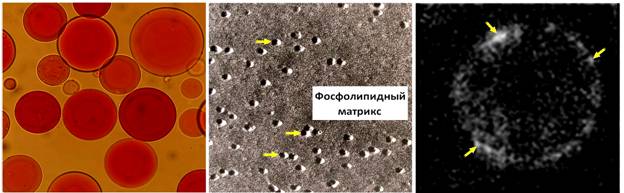
| Isolated cell vacuoles. Techniques have been developed for obtaining isolated vacuoles | Internal structure of membranes (electron microscopy; the arrows indicate functional proteins) | Lipoprotease of plant cells. Lipid domains (rafts) of vacuolar membrane (fluorescence microscopy; rafts are indicated by the arrows) |
Based on genetically modified plants, innovative vaccines are in development for peroral use as protection against dangerous infectious diseases.

| Candidate vaccine against AIDS and hepatitis C (developed in collaboration with State Research Center for Virology and Biotechnology “Vector”, the Institute of Chemical Biology and Fundamental medicine SB RAS and the Laboratory of Molecular Pathology (USA)) |
Candidate vaccine against hepatitis C (developed in collaboration with State Research Center for Virology and Biotechnology “Vector”, the Institute of Chemical Biology and Fundamental medicine SB RAS and the Laboratory of Molecular Pathology (USA)) |
Candidate vaccine against cervical cancer, as developed on the basis of the oncogenous type of HPV16 L1 virus (developed by the Siberian Institute of Plant Physiology and Biochemistry SB RAS) |
The DNA transport mechanism across the metochondrial membranes has been successfully studied. The findings have opened up brand new vistas for genetic modification of the mitochondrial genome.
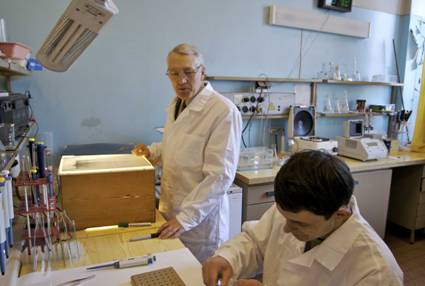
Conducting an experiment : Head of the Laboratory of Genetic Engineering of Plants,
Dr. Sci. (Biol.), Professor Yu.M. Konstantinov (left), and Senior Research Officer, Cand. Sci. (Biol.) A.I. Katyshev
Stress proteins have been discovered and are being successfully studied. The molecular mechanism for their effect on plants involving the influence of these proteins on the energy exchange between cells has been elucidated. The interaction of the information and energy systems of the plant cell under stress was revealed, and the heat resistance mechanisms of plants studied. The practical implementation of the research results involved the creation of new variety lines of winter wheat, triticale, rye and soya suitable for cultivation in the conditions of east Siberia.
The Institute is carrying out long-term research into environmental safety of Siberia’s vast regions, including urboecosystems. A comprehensive study is made of the forest ecosystems of Baikalian Siberia with the use of methods from geobotany and dendrochronology, and the various aspects of photosynthesis and productivity of forest stands are investigated in order to obtain a dynamic picture of their present state, and to assess the transformation of carbon fluxes in forest ecosystems. We have completed the studies into the forest-pathological importance of epiphytic fungi that do damage to the crown of coniferous trees in Southern Cisbaikalia; the influence zone of atmospheric emissions from the Baikalsk Paper and Pulp Mill was used as an example to demonstrate that the location of technogenic emission sources in Siberia’s mountains is inadmissible.
In addition to basic research, a great deal of research efforts with important ecological implications for the region have been accomplished. The Institute has participated in the work on maintaining and compiling the Red Data Books of a different level.
For purposes of preserving the Baikalian flora, the Regional Bank for seeds of rare, endangered and endemic plants of Cisbaikalia has been established, which formed the basis for establishing reserve populations of endangered plants on Olkhon Island, as natural populations are experiencing an enhanced anthropogenic degradation.
The Institute’s agroecologists have, for the first time, developed and tested the technique for mean annual assessment of the carbon balance and CO 2 fluxes from soils, having regard to land use practices and other ecological factors. They proposed an ingenious phytoremediation technology for arsenic-polluted soils.
The Institute operates the modernized Controlled Environmental Facility (Phytotron) to do research on plant physiology, and cell and tissue culture, and new forms of plants are propagated for breeding purposes. Work has started on the Institute-based Baikal Biotechnological Center.
During more than 40 years the Institute has maintained close contacts with Irkutsk State University (ISU), and with other higher educational establishments of Irkutsk. The Base Sub-Faculty of Plant Physiology, Cell Biology and Genetics of ISU has been active at the Institute for more than 40 years. The “ Small School Academy” for senior pupils is functioning.
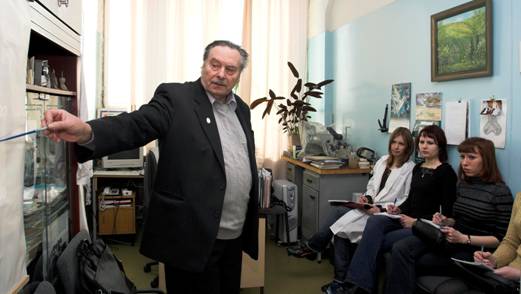
The Head of the Base Sub-Faculty of Plant Physiology and Cell Biology
of Irkutsk State University, Corr Mem of RAS R.K. Salyayev tutoring his students
The Institute has set up the “Museum of terrestrial Ecosystems of Baikalian Siberia” (herbarium, greenhouse, dendropark, and entomological collection) which boasts of unique archival materials that have been collected since the middle of the past century.
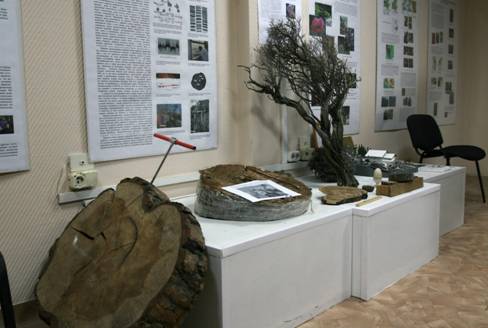
The Museum boasts of a gamut of interesting exhibits: lignificated wormwood (Artemisia rutifolia),
saw cut of larch tree, and foundation beams of the first stone building in Irkutsk ? Church of Our Savior
Since 2005, the Institute has been the founder of the Journal of Stress Physiology & Biochemistry which is published in the Russian and English languages.
The Institute is developing contacts with scientific institutions of Sweden, Italy, England, France, Germany, the USA, Mongolia, and Japan.