THE SIBERIAN BRANCH OF THE RUSSIAN ACADEMY OF SCIENCES
THE IRKUTSK SCIENTIFIC CENTER


IRKUTSK A.E. FAVORSKY INSTITUTE OF CHEMISTRY SB RAS
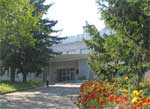
1 Favorsky St., Irkutsk, 664033, Russia
Tel. (395-2) 51-14-31, Fax (395-2) 41-93-46
e-mail: irk_inst_chem@irioch.irk.ru, www.irkinstchem.ru
The Institute was founded in 1957 and originally named Irkutsk Institute of Organic Chemistry. It was renamed to Irkutsk Institute of Chemistry in 1997 and to its current title in 2000.
Directors:
1957-1970 – M.F. Shostakovsky, Corresponding Member of the USSR Academy of Sciences;
1970-1994 – M.G. Voronkov, Academician of RAS
1994-2015
– В.A. Trofimov, Academician of RAS.
The Irkutsk А.Е. Favorsky Institute of Chemistry of the Siberian Branch of the Russian Academy of Sciences (IrlCh SB RAS) ranks among Russia’s largest centers doing basic research in the field of organic and hetero-organic chemistry. At the Institute, a strong foundation has been laid for the advancement of Russia’s leading scientific schools holding to the traditions of the School of Academician A.E. Favorsky, the great Russian organic chemist.
The research directions pursued by the Institute are: directed synthesis, investigation of the structure and properties of acetylene functional derivatives containing heteroatoms, multiple bonds, and heterocycles; investigation of the reactivity and structure of organosilicon compounds including those of hypervalent and tricoordinate silicon for the preparation of drugs, agricultural chemicals, and products of special use; wood chemistry, and chemistry of natural compounds.
Along with gaining new knowledge, the ultimate goal of the research carried out at the Institute is the synthesis of valuable products from oil and gas as well as from coal through acetylene. The traditions of Favorsky's school account for the fact that acetylene and acetylene-based organic and hetero-organic complex molecules have been the main subject of the Institute’s scientific research since the day of its foundation. The Institute’s chemists received the A.M. Butlerov Prize of the Presidium of the Russian Academy of Sciences for a series of works on the synthesis of biologically active compounds through acetylene derivatives became a recognition of the Institute’s leadership in the acetylene chemistry.
Another priority area of research pursued by the Institute is the chemistry of organic compounds of silicon of unusual valence. Investigations along this line made the Institute world-famous and brought it the State Prize of the Russian Federation.
The Institute continues basic research into the structure and chemical behavior of complex organic and hetero-organic molecules, and on the design of substances with predetermined properties.
New fundamental chemical reactions have been discovered. Among them are two best known ones. The first one is the reaction of ketoximes with acetylene, and the other one is the reaction of elemental sulfur with arylhaloalkanes. The former (in monographs and text-books referred to as the Trofimov reaction) leads to pyrroles, key structural units of vitally important natural systems (chlorophyll and hemoglobin). The latter reaction provides a direct pathway to diverse sulfur-containing heterocycles (the Voronkov reaction).
New processes and technologies, and commercially valuable products and materials such as drugs, environmentally-friendly pesticides, plant-growth regulators, polymers, fragrant and flavor compounds, sorbents, complex forming agents, ion exchangers and scavengers, agents for extraction of metals and pollutants, corrosion inhibitors, fuel and oil modifying additives, materials for new-generation microelectronics and lithium accumulators, and fuel cells, energy-rich substances for rocket fuels, etc. are being created at the Institute.
Among the original innovative technologies, the following deserve mention: direct acetylene-based vinylation and ethynylation in the presence of superbase catalysts (synthesis of new monomers and starting compounds for the preparation of fragrant substances and vitamins), «anchor» epoxidation (manufacture of highly pure compounds and glues for use in microelectronics), catalytic carbonylation of acetylene with CO with retention of the triple bond (synthesis of vitamin analogs and natural antibiotics), the world’s first industrial synthesis of indole from cyclohexanone oxime (semiproduct in the production of caprolactam) and acetylene, new avenues for the formation of siloxane structures, metal complex-catalyzed hydrosilylation, organotin synthesis of carbo- and heterocyclic systems, and deep sulfurization of polymers.
The novelty, originality, and practical focus of research are proved by the convincing number of Inventor's Certificates and patents - over 1500 to date. About 200 papers are published annually in leading international and domestic journals. Informational and bibliographic bulletins come off the press regularly.
The research at the Institute is progressing in collaboration with scientists from the USA, Germany, Korea, France, China, Israel, Japan, Mongolia, Poland, Denmark, and Belgium.
Since long the Institute has been training competent scientific brain power: for all the years the number of Candidates of Science (Ph. D) and Doctors of Science bred up in the Institute has reached 400, and exceeded 70, respectively.
Now that the Institute strengthens its invariable focus on chemistry in the interest of man (medicinal chemistry, ecological aspects, wood chemistry, chemistry of natural compounds extracted from Siberian endemic plants, synthesis of fragrant compounds of natural origin such as citral and its analogs, synthesis of Radiola rosa active principles, direct vinylation of sugars, cellulose and lignin with acetylene, epoxidation and amination of lignin-containing waste of pulp-and paper mills, modifications of alkaloids, steroids, and natural polymers, synthesis of biostimulators and adaptogens), the efforts aimed at the creation of new drugs are a first priority in the spectrum of investigations carried out at IrlCh.
A large number of medicines in different stages of testing and readiness for use are available. The Institute received approval of the Ministry of Health of the Russian Federation to use in the medical practice such drugs as Trecrezan, a stimulant with a broad spectrum of action, Acyzole, an antidote for carbon monoxide intoxication, Feracryl,a highly efficient blood arresting agent, Diquertin, an anti-oxidant and capillary protector, and Anavidin, a water-soluble highly effective antiseptic with a broad range of action. In 2006, in Moscow the presentation of the Acyzole drug was made by pharmaceutical company Makiz-Farma Ltd. That started its production. Efficient carbon monoxide antidote Acyzole, and the currently popular capillary protector Diquertine (Dehydroquercitine) are among Russia’s original brands worked out through collaboration of the Russian Academy of Sciences with medical workers.
Also, the Institute is doing work on deep processing of wood, and on the synthesis of multifunctional biocomposites (including with the use of natural compounds), with a controlled complex of magnetic, optical, catalytic and biologically active properties. On the basis of these new hybrid nanosized materials, original and highly efficient medical products can be obtained, representing composites with nanosized nuclei of biologically active metals (iron, zinc, silver, palladium, platinum, etc.) incapsulated into biopolymers. Due to their special structure, such nanobiocomposites can easily penetrate through a cell membrane. This research area is currently being actively pursued all over the world, and the institute is among the leaders here.
In many countries, much attention is now paid to a processing of lignin (pulp-and-paper, and hydrolysis industry waste). For the Irkutsk region this is a long-standing problem. Therefore, the Institute has prioneered the investigations related to the development of lignin-based epoxy resins, and engineering plastic as well as lingo-mineral fertilizers. Many factors contribute to the rapid progress of this research area, including ecological problems caused by the dumping of lignin (spontaneous combustion of lignin, and soil and water pollution).
Much attention is given to the ecology of the Irkutsk region, and Lake Baikal, and to the concepts of coal-gas-petrochemical and wood-chemical complexes of East Siberia. The latter is of primary importance because the vast territories along the Angara river basin and around Lake Baikal are expected to play a leading role in the inevitable geopolitical reorientation of Russia to the southeastern and Pacific regions.
During the past 55 years, a huge number of basic and applied research results have been achieved by the Institute. Currently it occupies a prominent place in the field of organic and hetero-organic chemistry. The most important of its discoveries, inventions and research developments will serve as a basis for a further development, drawing on the world’s tendencies in chemical science and, certainly, having regard to the demands of the region.